How to Break 90 Without Taking Expensive Lessons
How to Break 90 Without Taking Expensive Lessons
Most golfers who are stuck in the 90s think their swing is the problem. It usually isn’t.
The difference between shooting 94 and shooting 88 is rarely swing mechanics. It’s decision-making, course management, short game, and eliminating the two or three holes per round where everything falls apart. Fix those things and most golfers break 90 before they ever fix their swing.
Lessons are valuable. A good teaching pro can absolutely accelerate your improvement. But at $80–$150 per hour, they’re an expensive solution to a problem that, for most mid-handicap golfers, isn’t primarily a swing problem. This article gives you the framework to break 90 through smarter play and targeted practice — no lesson required.
Understand What Breaking 90 Actually Requires
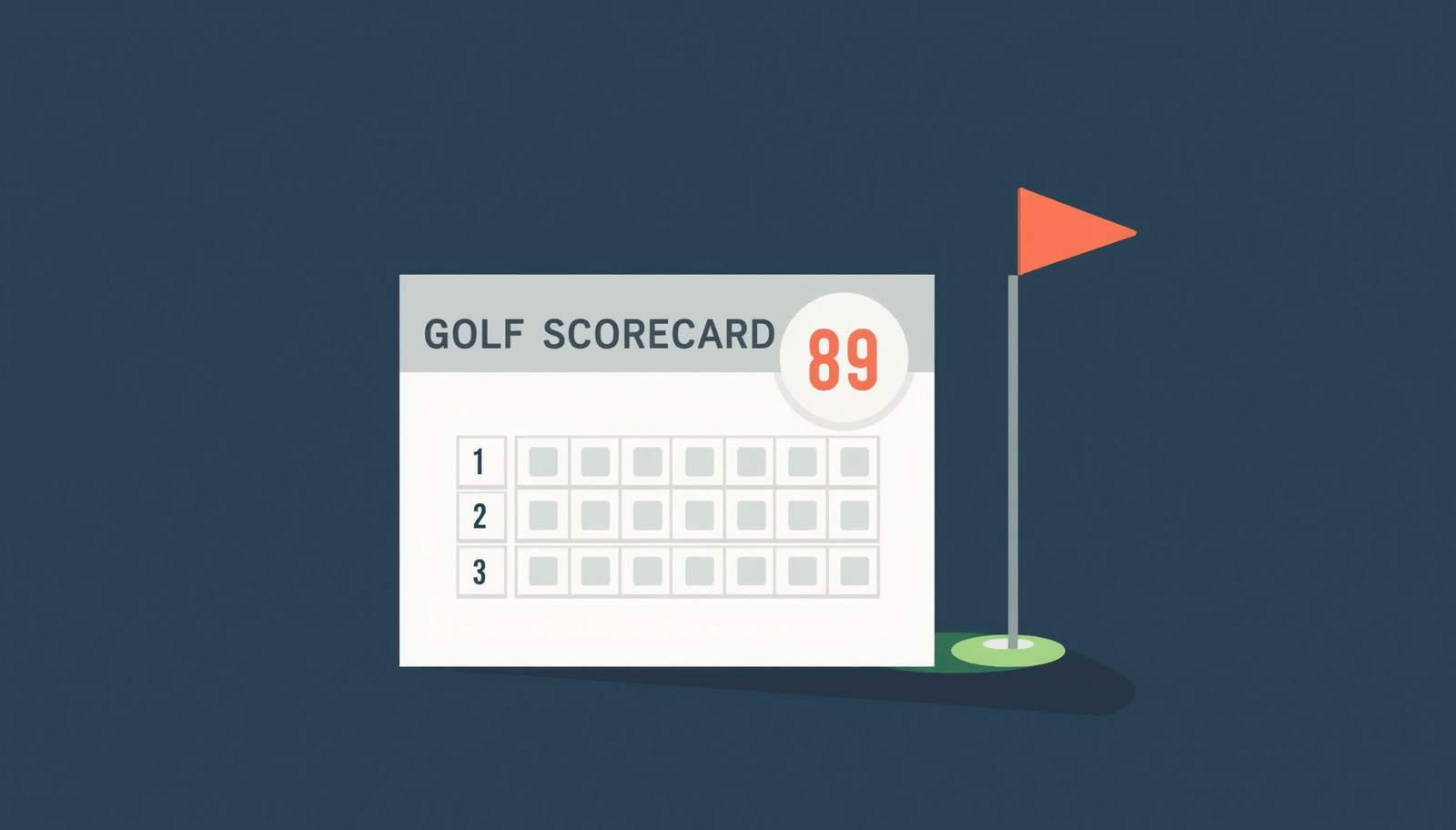
Let’s start with the math. Breaking 90 on a par-72 course means shooting 89 or better — that’s 17 over par.
Here’s what 17 over par looks like in practice:
- Bogey on every hole: 90. One shot over the target.
- Bogey golf with two pars: 88. Comfortably under 90.
That’s the framework. You don’t need pars to break 90. You don’t need birdies. You need to bogey most holes and avoid the blow-up holes that turn a routine bogey into a triple.
The golfer who shoots 94 isn’t hitting the ball that differently from the golfer who shoots 87. They’re making worse decisions, taking on shots they can’t execute, and letting one bad shot turn into three. That’s a decision problem, not a swing problem.
Rule 1: Stop Trying to Be a Hero
The single biggest scoring killer for golfers in the 90s is attempting shots they can’t execute.
You’re 220 yards out over water with a 6-iron. You’ve hit that shot clean maybe twice in your life. You go for it anyway because it worked once and because you’ve seen tour players pull it off on TV. You make a 7.
Here’s what a 7 does to your scorecard: it takes what should have been a bogey 5 and turns it into a hole that’s already cost you three shots before you putt. Do that twice a round and you’ve spotted the course 6 strokes before you’ve done anything else wrong.
The rule is simple: only attempt shots you can execute 7 out of 10 times in practice. Not your best shot. Your average shot. If you can’t hit that 220-yard 6-iron over water 7 out of 10 times on the range with no pressure, you can’t hit it on the course with a scorecard in your hand and water staring you down.
Take the safe route. Lay up. Give yourself a full swing from a distance you’re comfortable with. Make your bogey and move on. Bogeys win rounds.
Rule 2: Manage Your Misses Before You Hit the Shot
Every golfer misses. The difference between a good round and a bad one is often where those misses end up.
Before you hit any shot, ask one question: if I miss this, where does it go?
If the miss goes into a hazard, a penalty area, or an unplayable lie — rethink the shot. If the miss goes into the rough on the safe side, into a bunker you can get out of in one, or just short of the green — that’s a manageable miss. Make the shot that gives you a manageable miss even when it doesn’t come off perfectly.
This is course management. Tour players do it on every single shot. It’s not about playing scared — it’s about playing smart. The athlete who knows where the sideline is doesn’t stop competing near it. They use the whole field within the boundaries.
Pick targets that funnel your misses away from trouble. Aim for the fat part of the green instead of the pin tucked behind a bunker. Take an extra club and swing easy rather than grinding out a full swing with your longest iron. Course management doesn’t require swing changes — just better decisions before you pull the trigger.
Rule 3: Make the Short Game Your Competitive Advantage
Here’s a number worth knowing: on a par-72 course, 36 of your shots are supposed to be putts. That’s half your scorecard allocated to the putter before you ever swing a full club.
For most golfers shooting in the 90s, putting and chipping are where rounds are won or lost — not the tee shot. A three-putt from 20 feet is a free bogey turned into a double. A chip that runs off the back of the green and leads to another chip and two putts is three shots from 30 yards.
The short game practice that moves the needle fastest:
Lag putting. From 20–40 feet, your goal is to get the ball within a 3-foot circle of the hole — not to make it. Two-putts from distance. Take six balls to the practice green and roll them from 25, 30, and 40 feet. Count how many end up within 3 feet. Do this for 15 minutes before you work on swing mechanics.
The 50-yard chip. This is the shot most golfers practice least and need most. From 40–60 yards, you’re in no-man’s land — too far for a chip, too close for a full wedge. Most golfers blade it over the green or chunk it short. Spend 20 minutes a week hitting half-wedge shots from this distance until you can get it on the green consistently.
3-foot putts. Make 50 in a row from 3 feet. It sounds boring because it is. It also eliminates the most demoralizing shot in golf — the short putt you’re supposed to make that somehow lips out. If you can make 50 straight from 3 feet in practice, the 3-footers on the course stop being a source of anxiety.
Rule 4: Fix the Blow-Up Holes First
Every golfer who shoots in the 90s has blow-up holes. The par-4 where they always make a 7 or 8. The par-3 over water that’s taken a 6 from them twice this month. The hole where everything falls apart.
Track your scores by hole for three rounds. Look for the pattern. You’ll find it — usually two or three holes per round where you’re giving away 3–4 extra shots relative to everywhere else.
Then make a plan for those specific holes. Not a swing plan — a strategy plan.
Maybe the par-4 with the tight driving hole requires a 3-wood off the tee instead of driver. Maybe the par-3 over water needs a club more than you think and an aim point 20 feet left of the pin. Maybe the hole where you always go out of bounds on the right needs a closed stance at address and a target line down the left side.
The blow-up holes are a fixable problem once you identify them. Most golfers just keep walking up to the same tee, hitting the same shot, and getting the same result. Make a different plan and execute it.
Rule 5: Get the Ball Off the Tee Consistently
Distance is nice. Fairways win rounds.
You don’t need to be long off the tee to break 90. You need to be in the fairway — or at least in the short rough — consistently enough that your second shot is a real shot rather than a punch out from under a tree.
If your driver is causing problems — if it’s producing out-of-bounds, lost balls, or unplayable lies on a regular basis — put it back in the bag for a month. Play a 3-wood or a hybrid off every tee. Lose 20–30 yards of distance, gain 4–5 fairways per round. The math almost always favors the fairway.
A 180-yard shot from the fairway is worth more than a 210-yard shot from the trees. Every time.
When you do use the driver, pick a specific target — not “down the middle” but a specific tree, a bunker edge, a spot in the fairway — and aim at it. Vague targets produce vague results. Athletes know how to focus on a specific target under pressure. Use that.
The Practice Routine That Actually Moves the Score
Most golfers practice by going to the range and hitting drivers until their arms are tired. That’s the slowest way to lower your score.
Here’s a practice allocation that targets breaking 90 specifically:
| Practice time | Activity |
|---|---|
| 40% | Short game — putting and chipping within 50 yards |
| 30% | Wedge play — 50 to 100 yards |
| 20% | Irons — 7-iron and 8-iron, consistency not distance |
| 10% | Driver — last, not first |
The driver goes last because it’s the least important club for breaking 90 and the most fun to hit — which means most people do it first and run out of time for everything else. Flip the order.
If you only have 30 minutes, spend 20 of them on the putting green. That’s where the strokes are.
The Physical Edge Most Golfers Leave Behind
One thing the handicap doesn’t show: golfers who are in better physical condition make better decisions on holes 14 through 18.
Fatigue is a scoring killer in golf. When you’re tired, your swing gets shorter, your focus narrows, and the course management discipline you had on the front nine starts slipping. The golfer who shoots 43 on the front and 51 on the back isn’t hitting it worse on the back — they’re deciding worse.
Basic golf fitness — hip mobility, rotational strength, core stability — keeps your swing functional deep into the round. The golf fitness routine on this site is built specifically around the physical qualities that hold up over 18 holes, not just the first nine.
One Round, One Focus
Pick one thing from this article to focus on in your next round. Not all of them. One.
If blow-up holes are your problem, track your score by hole and make a plan for the two worst ones before you tee off. If the short game is leaking strokes, commit to two-putting from distance and getting up and down from inside 50 yards. If hero shots are killing you, commit to the 7-out-of-10 rule for every shot you hit.
One thing, executed with discipline for 18 holes, will tell you more about your game than a swing lesson. Do it for three rounds. Then add another thing.
Breaking 90 is a process, not a breakthrough. Athletes understand this better than most — improvement comes from stacking small, consistent gains, not from one magic fix.
And if you’re building out your equipment alongside your game, the budget golf clubs article covers exactly what you need at this stage — and what you don’t.