Golf Fitness Routine for Guys Over 35 — Add 20 Yards
Most golfers over 35 who want more distance go buy a new driver. That’s the wrong move.
Equipment can add yards at the margins. Your body is where the real distance gains are hiding. Specifically: your hip mobility, rotational power, and posterior chain strength — three things that decline quietly after 35 if you’re not training them deliberately.
The good news is that none of this requires a gym membership, a personal trainer, or two hours a day. The routine below takes 20–30 minutes, three times a week, and targets exactly the physical qualities that produce clubhead speed. That’s the number that drives distance — and it’s trainable at any age.
Why Distance Drops After 35 (And What Actually Fixes It)
Before getting into the exercises, it helps to understand what’s actually happening to your swing as you get older.
Three things erode after 35 that directly affect golf distance:
Hip mobility. A full golf swing requires significant hip rotation — your hips need to turn through the ball while your upper body stays back briefly to create separation. When hip mobility tightens up, your swing gets shorter, your body compensates by moving in ways it shouldn’t, and clubhead speed drops.
Rotational power. Power in the golf swing comes from your ability to create and release rotational force — loading your backswing and then transferring energy through the ball. This is a trainable athletic quality, and like most athletic qualities, it fades without training.
Posterior chain strength. Your glutes, hamstrings, and lower back are the engine of a powerful golf swing. Weak glutes mean your hips don’t fire properly at impact. Tight hamstrings limit your hip hinge. A weak lower back can’t maintain posture through the swing. These aren’t golf-specific problems — they’re the physical consequences of sitting at a desk 40 hours a week.
The routine below targets all three. It’s not a general fitness program — it’s built specifically around the movement patterns a golf swing demands.
The Routine — 3 Days Per Week, 20–30 Minutes
Do this on non-consecutive days. Monday/Wednesday/Friday works well. Each session has three phases: mobility, power, and strength. Don’t skip the mobility work — it’s not a warm-up filler, it’s the most golf-specific part of the routine.
Phase 1: Mobility (8–10 minutes)
90/90 Hip Stretch — 2 minutes per side
Sit on the floor with both legs bent at 90 degrees — one leg in front, one behind. Keep your spine tall and lean gently forward over the front leg. This stretches the hip external rotators and internal rotators simultaneously, which is exactly the range of motion your hips need to rotate fully through a golf swing.
Don’t rush this. Two minutes per side, breathing slowly. If this position is painful or extremely tight, that’s diagnostic information — your hips are restricting your swing more than you realize.
World’s Greatest Stretch — 5 reps per side
Start in a lunge position. Place the same-side hand on the ground inside your front foot. Rotate your opposite arm up toward the ceiling, following it with your eyes. Then bring it back down and thread it under your body. This single movement opens your hips, thoracic spine, and shoulders — the three areas that determine your backswing depth.
Five reps per side, controlled and deliberate.
Hip 90/90 Transitions — 10 reps
From the 90/90 position, rotate your hips to switch legs from front to back without using your hands. This builds active hip mobility — not just passive flexibility, but the ability to control your hips through a range of motion under load. That’s what matters in a dynamic movement like a golf swing.
Phase 2: Power (8–10 minutes)
Medicine Ball Rotational Throw — 3 sets of 8 per side
Stand sideways to a wall (or use a rebounder) with a light medicine ball — 6 to 10 lbs. Load your backswing by rotating away from the wall, then drive through with your hips and throw the ball into the wall. Catch and repeat.
This is the most specific power exercise for golf on this list. It trains the exact rotational sequence your swing uses — hip drive first, then torso, then arms. If you only do one power exercise, make it this one.
No medicine ball? Use a light dumbbell held at your chest and practice the rotation pattern without throwing. Less effective, but it works.
Pallof Press — 3 sets of 10 per side
Anchor a resistance band at chest height. Stand perpendicular to the anchor point, hold the band at your chest with both hands, and press it straight out in front of you. Hold for a second, then bring it back. The band is trying to rotate you toward the anchor — your job is to resist that rotation.
This trains anti-rotation core stability, which is what keeps your swing on plane and transfers power efficiently from your lower body to the club. It’s not a glamorous exercise. It’s one of the most useful ones on this list.
Broad Jump — 3 sets of 5
Stand with feet shoulder-width apart. Hinge at the hips, load your glutes, and jump forward as far as you can. Land softly with bent knees. Reset and repeat.
Broad jumps train explosive hip extension — the same firing pattern your glutes use at impact. If your glutes aren’t contributing to your swing, you’re leaving yards on the table. This exercise wakes them up.
Phase 3: Strength (8–10 minutes)
Romanian Deadlift — 3 sets of 10
Hold dumbbells or a barbell in front of your thighs. Hinge at the hips — keeping your back flat and knees slightly bent — until you feel a stretch in your hamstrings, then drive your hips forward to stand back up. This is not a squat. Keep the weight close to your body throughout.
Romanian deadlifts strengthen your hamstrings, glutes, and lower back in the exact position your body is in at address. Weak posterior chain is the single most common physical limiter for golfers over 35. Three sets of 10, twice a week, fixes this faster than most people expect.
Split Squat — 3 sets of 8 per side
Stand in a lunge position with your back foot elevated on a bench or chair. Lower your back knee toward the floor, then drive back up through your front heel. This builds single-leg strength and hip flexor flexibility simultaneously — both of which matter for generating and maintaining power through a full swing.
If balance is an issue, do regular reverse lunges instead. Same muscle groups, more stable.
Band Pull-Apart — 3 sets of 15
Hold a light resistance band at shoulder height with both hands, arms extended. Pull the band apart by squeezing your shoulder blades together until the band touches your chest. Slowly return.
This strengthens the rear deltoids and rotator cuff — the muscles that decelerate your swing and protect your shoulder from injury. Most golfers over 35 who develop shoulder issues have weak posterior shoulder muscles from years of pressing and pulling without this counterbalance. Three sets of 15 takes four minutes and goes a long way toward keeping your shoulder healthy.
The Missing Piece Most Golfers Skip
Everything above builds the physical qualities a golf swing needs. But here’s what actually connects gym work to yards on the course: deliberate practice with your new mobility and power.
After this routine, spend 10–15 minutes hitting balls or making practice swings with a specific focus on using what you just trained. Feel your hips rotate more fully. Feel your glutes fire through impact. Your brain needs to learn to use the new range of motion your body now has.
Fitness without practice transfer is just fitness. The combination is what adds yards.
How Long Before You See Results
Mobility improvements happen fast — most people feel a difference in hip range of motion within two to three weeks of consistent work. That translates to a slightly longer, more controlled backswing almost immediately.
Power and strength take longer. Plan for six to eight weeks before you see meaningful changes in clubhead speed. That’s one full season of committed work.
The athletes who played competitive sports understand this timeline intuitively. You didn’t get noticeably stronger after one week of preseason lifting. The adaptation takes time, the results compound, and then one day someone asks what you changed.
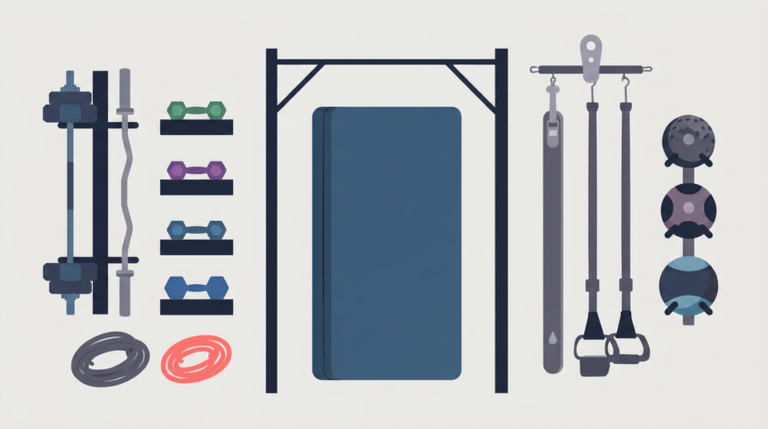
If you’re building a home gym setup to support this kind of training, the home gym article on this site covers exactly what equipment earns its space — starting under $500.
The Bottom Line
More distance after 35 doesn’t come from a new driver. It comes from mobile hips, a powerful rotation, and a posterior chain that can actually generate and transfer force.
Three days a week, 20–30 minutes. That’s the investment. The routine above targets the exact physical qualities your swing needs — not general fitness, not cardio, not anything you’d find in a generic workout plan.
Start with the mobility work. It’s the fastest win and the foundation everything else builds on. Add the power and strength work as the routine becomes familiar.
Your handicap will thank you before your equipment does.