Building a Golf Bag on a Budget: A Realistic Set That Works
Golf is the only sport where spending more money often makes you worse. A $3,000 set of clubs doesn’t fix a bad swing — it just makes the bad swing more expensive.
Here’s how to build a complete, capable bag without overspending on clubs you don’t need yet.
What You Actually Need in the Bag
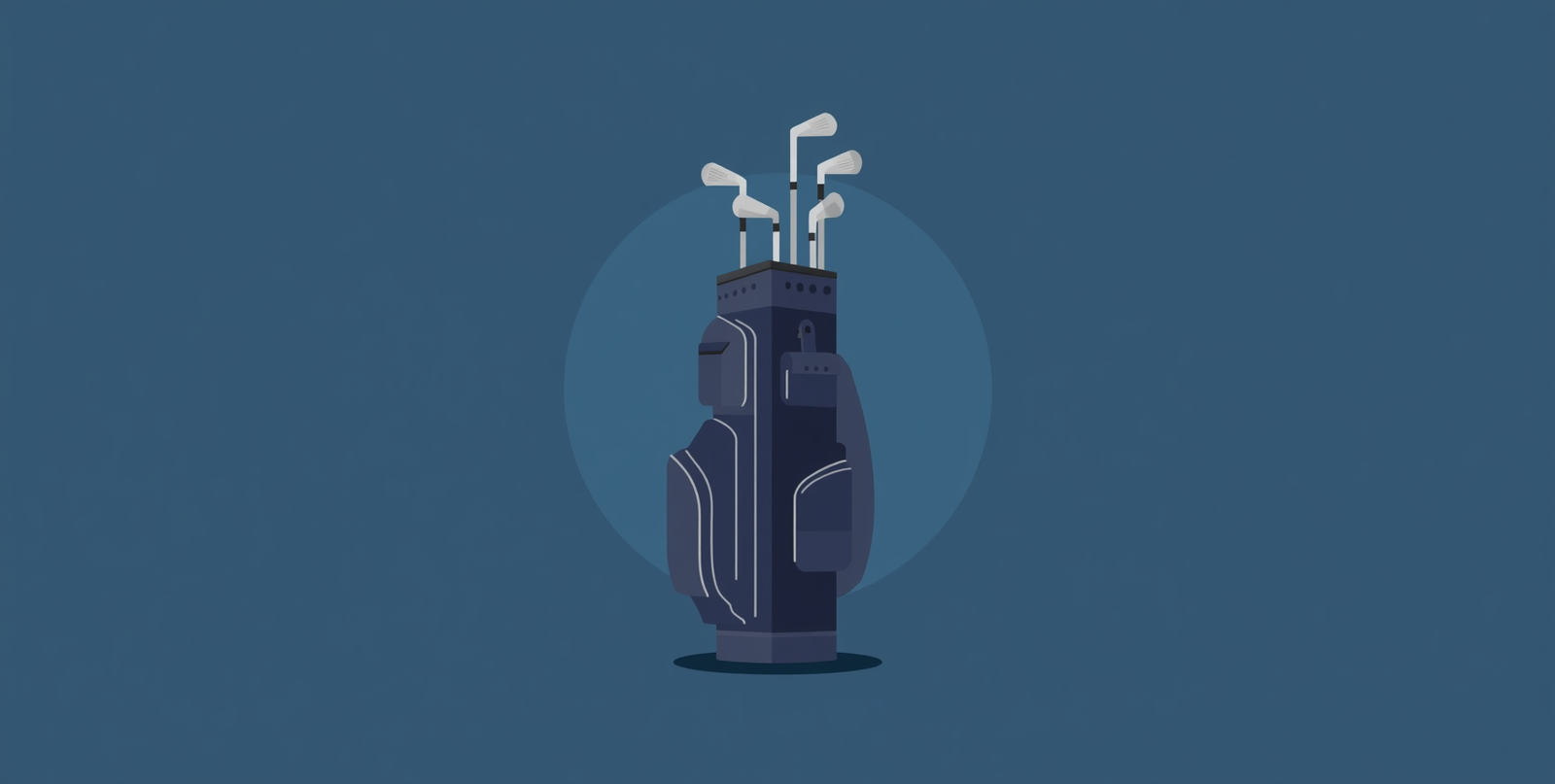
A full bag has 14 clubs max, but most golfers — especially beginners and mid-handicappers — don’t need anywhere close to that to play well. Here’s the realistic priority list:
- Driver — your distance off the tee
- Fairway wood (3-wood or 5-wood) — versatile distance club for long approach shots
- Hybrid (3 or 4 hybrid) — easier to hit than long irons, great for beginners
- Irons (6 through 9, or a full 4–9 set) — your bread-and-butter approach clubs
- Pitching wedge — usually included with iron sets
- Sand wedge / gap wedge — short game around the green
- Putter — arguably the most important club in the bag
That’s 9–10 clubs. You can build a fully functional bag around this list and add specialty clubs (lob wedge, extra hybrids) later as your game develops.
Where to Spend, Where to Save
This is the part most golfers get backwards. They overspend on the driver — the club they hit maybe 14 times a round — and underspend on the putter, which they use far more often.
Spend more here:
- Putter. You’ll use it on nearly every hole. A putter that fits your stroke and stance matters more than brand name. Budget: $40–80 for a quality used or budget-new putter.
- Wedges. Short game separates good scores from bad ones. A decent sand wedge with proper bounce makes a real difference around the green. Budget: $30–60 each.
Save here:
- Driver. Beginner and mid-handicap golfers lose far more distance to off-center contact than to driver technology. A 3–5 year old driver from a major brand performs nearly identically to this year’s model for the average golfer. Budget: $50–100 for a quality used driver.
- Fairway woods and hybrids. Same logic as the driver — last generation’s models are dramatically discounted and play almost the same. Budget: $30–60 each.
- Iron sets. Buy a complete used set rather than building one iron at a time. Matched sets from 3–5 years ago in good condition are widely available. Budget: $100–200 for a full set.
The Realistic Budget Breakdown
Here’s what a complete, functional bag looks like at three different budget levels.
Under $200 (entry-level, used/budget-new):
- Used complete iron set (6–9, PW): $100
- Used driver: $50
- Used putter: $30
- Used bag (carry or basic cart bag): $20
- Total: ~$200
$300–400 (solid mid-range, mix of used and budget-new):
- Used or budget-new complete iron set: $150
- Used driver (3–5 years old, major brand): $80
- Used fairway wood or hybrid: $40
- Quality used putter: $50
- Sand wedge: $40
- Bag: $40
- Total: ~$400
$500–600 (well-rounded set, room for newer gear):
- Complete iron set (newer, budget-new or lightly used): $250
- Driver (1–2 years old): $150
- Hybrid: $60
- Sand wedge: $50
- Putter: $60
- Bag: $50
- Total: ~$620
You don’t need to hit the top tier to play a full, legitimate round of golf. The $200 setup will play every bit as well in your hands as the $600 setup — the swing is doing 90% of the work either side.
Where to Actually Buy
Used golf equipment marketplaces. This is where the real savings live. Clubs from 3–5 years ago are functionally excellent and priced at a fraction of retail. Look for clubs in “good” or “very good” condition — grooves and face wear matter more than cosmetic scratches on the shaft.
Off-season retail clearance. Golf retailers discount last year’s models heavily once new models launch, typically in late winter and early spring. This is a strong window to buy near-new clubs at used-club prices.
Demo days and trade-in programs. Many golf retailers run demo days where you can try clubs before buying, and most accept trade-ins toward a purchase — useful once you’ve outgrown your starter set and want to upgrade specific clubs.
Avoid: Generic off-brand “complete sets” sold as one bundle with no recognizable brand on the clubs. These are usually a step down in quality across the board and harder to resell or upgrade individually later.
The One Thing Worth Paying for New: Grips
Regardless of budget tier, regrip used clubs if the grips are worn, slick, or cracked. Fresh grips cost very little compared to the club itself and directly affect your control and consistency. A great club with a worn-out grip plays worse than a mediocre club with a fresh one.
Think of it like cleats with worn-down studs — the equipment underneath might be fine, but the part that actually contacts the game has degraded.
The Bottom Line
Building a golf bag on a budget isn’t about buying the cheapest version of everything — it’s about spending intentionally. Save on the driver and fairway woods, where last year’s technology barely matters. Spend a bit more on the putter and wedges, where you’ll actually feel the difference round after round.
A complete, capable bag is achievable for $200–400 if you buy used and buy smart. The clubs aren’t what’s holding back your scorecard — they never really were.
Your move today: Set a total budget, then allocate roughly 60% of it to irons and putter, and 40% to driver, woods, and wedges. Shop used first. You’ll be on the course with a complete bag for less than you think.
Sources & Data
- Golf Datatech — annual golf equipment market pricing and used club resale data: https://www.golfdatatech.com/
- USGA equipment rules on club specifications and conformance: https://www.usga.org/equipment-standards.html