Best Golf Rangefinder Under $200 — Ranked
Knowing your exact distance to the flag is one of the simplest ways to make better decisions on the golf course. Not because it fixes your swing — nothing in your bag does that — but because hitting the right club with confidence beats guessing and second-guessing every approach shot you hit.
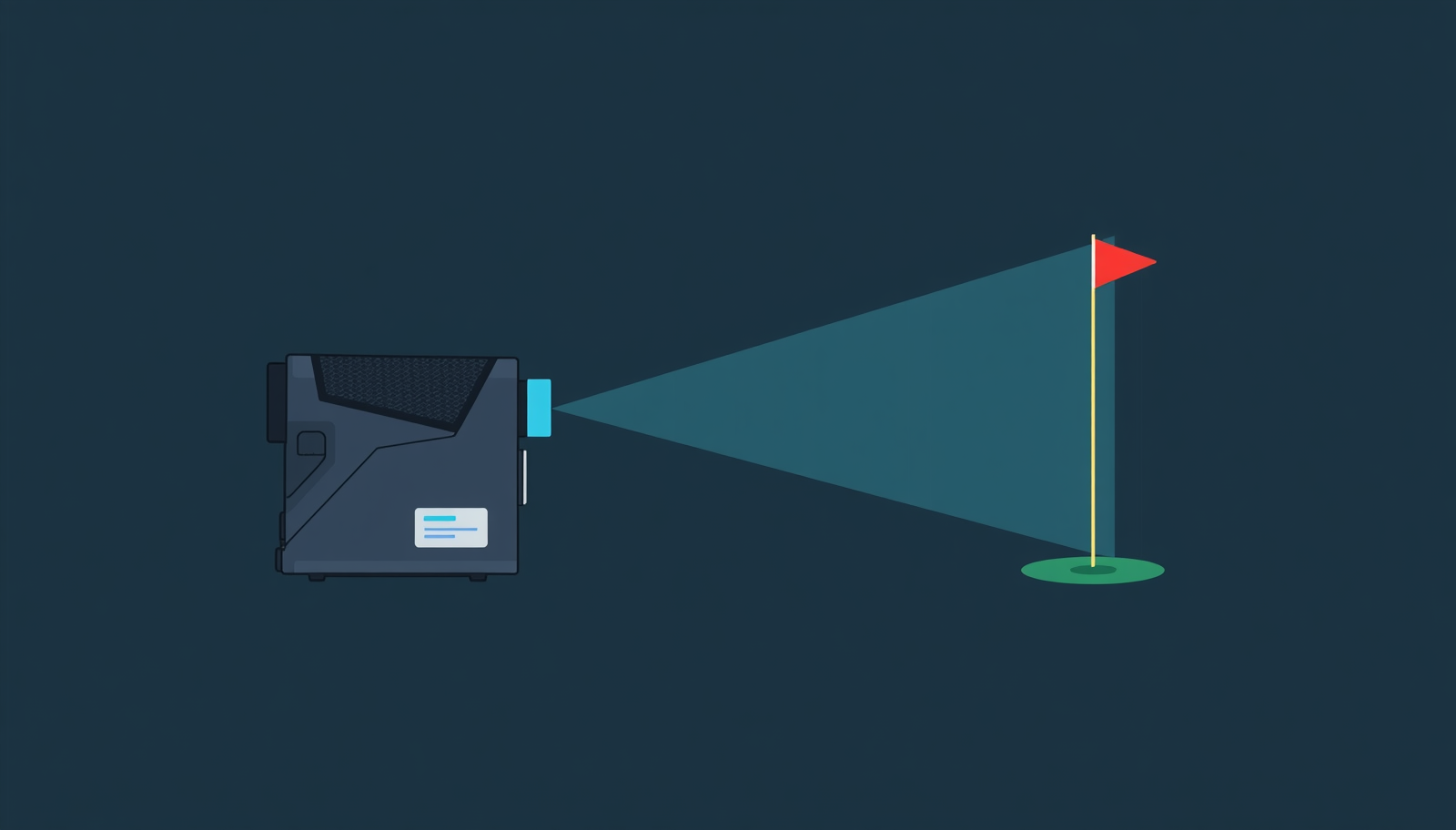
A rangefinder is how you stop guessing. Point it at the flag, press the button, get a number. That number tells you which club to pull. Over 18 holes, eliminating the “am I between clubs?” hesitation adds up faster than most golfers expect.
You don’t need to spend $400 to get a reliable rangefinder. The $150–$200 range covers everything a serious amateur golfer actually needs. Here’s what’s worth buying and what to skip.
(Prices based on mid-2026 availability. Verify before purchasing — rangefinder pricing fluctuates, especially around golf season.)
Rangefinder vs. GPS Watch — Which One Do You Need?
Before getting into specific models, it’s worth addressing the comparison most golfers eventually make.
A GPS watch gives you front, center, and back of green distances automatically as you walk each hole, plus hazard distances and course layout information — all without pointing at anything. It’s passive and continuous.
A laser rangefinder gives you precise distance to any target you point it at — the flag, a tree, a bunker face — with better accuracy than GPS (typically within 1 yard vs. 2–3 yards for GPS). It requires you to aim and fire for each reading.
Both are useful. They solve slightly different problems.
GPS watch wins for: course management between shots, hazard distances, and situations where you want continuous awareness of where you are on the hole without stopping to measure.
Rangefinder wins for: precise flag distance, targeting specific hazards or landing zones, and situations where exact yardage matters more than general awareness.
Many serious golfers use both. If you’re choosing one, consider your biggest gap: if you’re guessing on flag distances and picking the wrong club, start with the rangefinder. If you’re making poor course management decisions without knowing hazard distances, start with the GPS watch. The GPS watch article on this site covers that side of the decision in detail.
For this article: rangefinders.
What to Look for in a Rangefinder Under $200
A few features separate the good from the mediocre in this price range:
Flag-lock or pin-seeker technology. This is the feature that locks onto the flagstick rather than the trees or background behind it. Without it, you’re getting the distance to whatever is behind the flag — which is not the distance you want. Every rangefinder worth buying has some version of this. Confirm it before purchasing.
Accuracy. The best rangefinders in this price range are accurate to within 1 yard. Anything less than ±1 yard accuracy starts to create the same uncertainty you’re trying to eliminate.
Range. You need at least 400 yards of measurement range to cover any par-5 approach or long par-4 tee shot distance check. Most quality units go to 800–1,000 yards. More range than that is irrelevant for golf.
Magnification. 6x magnification is standard and sufficient for most golfers. 7x is slightly better for locking onto flags at longer distances. Below 5x makes the image difficult to use cleanly.
Slope measurement. Slope-compensating rangefinders adjust the displayed distance for elevation changes — a 150-yard shot uphill plays like 160, downhill like 140. Useful for practice and casual rounds. Important note: slope mode is not legal for tournament or handicap rounds under USGA rules. The best rangefinders have a toggle to disable slope mode for competitive play.
Size and grip. You’re using this one-handed, mid-round, often in wind or while standing on uneven ground. Compact, easy-to-grip units outperform larger ones in real playing conditions regardless of spec sheet comparisons.
The Rankings
Best Overall: Bushnell Tour V6 (~$180–$200)
Bushnell is the rangefinder brand. They’ve been making the benchmark product in this category for years and the Tour V6 is their current best offering in the under-$200 range.
The Tour V6 locks onto flags quickly and reliably — the Bite magnetic cart mount is included, which is a genuinely useful addition — and reads to ±1 yard accuracy. The optics are clear and the 5x magnification is clean enough to use comfortably in most lighting conditions. It’s compact, fits easily in a pocket, and the single button operation means you’re not fumbling with settings mid-round.
Slope mode is included and easily toggled. The legal mode disables slope for competitive rounds.
At $180–$200, the Tour V6 is the straightforward recommendation for anyone who wants a reliable, name-brand rangefinder at the top of this budget. It’s what most serious amateurs in this price range should buy.
Best for: Golfers who want the most trusted brand and most reliable performance under $200.
Best Value: Precision Pro NX10 (~$150–$170)
Precision Pro has built a strong reputation as the value challenger to Bushnell, and the NX10 is their best current option.
The NX10 delivers ±1 yard accuracy, 400+ yard range, and a clear 6x magnification view. The Pulse Vibration feature — a short vibration when the unit locks onto the flag — is genuinely useful feedback that removes the uncertainty of “did I get the flag or the tree behind it?”
What makes Precision Pro particularly worth considering at this price: they offer free battery replacement for the life of the product and a two-year warranty. The battery replacement program alone is worth noting — CR2 batteries for rangefinders run $8–$12 each and need replacing once or twice per season for regular golfers.
At $150–$170, the NX10 is $20–$30 cheaper than the Bushnell Tour V6 with comparable performance. If the warranty and battery program matter to you, this is the better deal.
Best for: Value-focused golfers who want reliable performance with strong after-purchase support.
Best Slope Option: Blue Tees Series 3 Max (~$170–$190)
Blue Tees has become a popular option in the budget-to-mid rangefinder space, and the Series 3 Max is their strongest product.
The slope feature on the Series 3 Max is particularly well-implemented — the display clearly shows both the actual distance and the slope-adjusted distance simultaneously, so you’re not choosing between them or toggling modes to see the number you want. For golfers who use slope regularly in practice rounds, this dual-display is a genuine quality-of-life improvement over rangefinders that show one or the other.
Accuracy is ±1 yard, magnification is 6x, and the build is solid for the price. Flag lock is reliable in standard conditions — less so in heavy wind or with flags that aren’t moving much, which is a limitation shared by most rangefinders in this price range.
At $170–$190, the Series 3 Max earns its spot for golfers who specifically value the slope feature and want a clean implementation of it.
Best for: Golfers who use slope frequently in practice rounds and want the clearest display of both actual and adjusted distances.
Best Budget Pick: Gogogo Sport Vpro (~$80–$110)
This one exists in a different tier but gets mentioned because the price gap is significant and the performance is better than it has any right to be at $80–$110.
The Gogogo Sport Vpro delivers ±1 yard accuracy, flag-lock with vibration confirmation, and a 6x magnification view. For casual golfers who play 10–15 rounds a year and want accurate yardages without spending $150+, it performs adequately.
The caveats are real: build quality is noticeably lower than the Bushnell or Precision Pro options, the flag-lock is less reliable in challenging conditions, and the optics aren’t as clear at longer distances. But for a golfer whose main need is knowing how far they are from the flag on a typical approach shot, it does the job.
Best for: Casual golfers who play infrequently and want basic rangefinder function without the investment of a premium unit.
The Comparison at a Glance
| Rangefinder | Price | Accuracy | Magnification | Slope | Vibration Lock | Notable Feature |
|---|---|---|---|---|---|---|
| Bushnell Tour V6 | $180–$200 | ±1 yd | 5x | Yes (toggle) | Yes | Magnetic mount included |
| Precision Pro NX10 | $150–$170 | ±1 yd | 6x | Yes (toggle) | Yes | Free battery replacement |
| Blue Tees Series 3 Max | $170–$190 | ±1 yd | 6x | Yes (dual display) | Yes | Simultaneous slope display |
| Gogogo Sport Vpro | $80–$110 | ±1 yd | 6x | Yes | Yes | Price |
Which One Should You Actually Buy
If you want the best unit under $200 from the most proven brand: Bushnell Tour V6.
If you want comparable performance with better warranty support and $20–$30 savings: Precision Pro NX10.
If slope is your priority and you want the cleanest dual-display implementation: Blue Tees Series 3 Max.
If you play casually and want basic function at the lowest price: Gogogo Sport Vpro.
For most golfers reading this — playing 20–40 rounds per year, taking the game seriously, and wanting reliable performance — the Bushnell Tour V6 and the Precision Pro NX10 are the two real options. The decision between them comes down to brand preference and whether the Precision Pro warranty program appeals to you.
A Note on Slope and Tournament Play
If you ever play in club competitions, member-guests, or any round where an official score is kept for handicap purposes, verify the slope rules before your round.
Under current USGA rules, rangefinders with slope are permitted in most recreational play but must have slope disabled for rounds where handicap strokes are being applied competitively. Most modern rangefinders with slope have a clearly marked legal mode — confirm you know how to enable it before your round, not on the first tee.
If you’re working on breaking 90 and using course management as part of your approach, the right rangefinder takes the distance guesswork completely off the table. That article covers how to use accurate yardage as part of a smarter decision-making framework on the course.