Protein Intake for Muscle Building — How Much You Actually Need
Most people in the gym are either undereating protein or obsessing over it to a degree that makes no difference. Both are a waste.
Here’s what the research actually says, what I’ve found works after 20+ years of training, and how to hit your number without turning every meal into a math problem.
The Number That Actually Matters
The research on protein for muscle building has converged around a clear range: 0.7 to 1 gram of protein per pound of bodyweight per day is where you want to be if you’re actively training.
At 180 lbs, that’s 126–180 grams of protein per day. At 200 lbs, that’s 140–200 grams.
Most people eating a standard American diet are getting somewhere between 60 and 100 grams. That’s enough to survive. It’s not enough to build meaningful muscle.
If you’re closer to 0.7g/lb, you’ll make progress — especially if you’re newer to training or eating in a caloric surplus. If you’re pushing closer to 1g/lb, you’re giving your body every possible advantage to recover and build. The difference between the two is real but not dramatic. Consistency in training matters more than whether you hit 160g or 180g on a given day.
Why Protein Is the Non-Negotiable
Muscle is made of protein. When you train, you create micro-tears in muscle tissue. Your body repairs those tears during recovery — and it uses amino acids (from dietary protein) as the raw material to do it.
If you’re not providing enough protein, the repair process is limited. You can train perfectly and sleep 8 hours and still leave results on the table because the building blocks aren’t there.
Carbohydrates fuel the workout. Fats support hormone production. Protein builds the muscle. All three matter — but protein is the one most people get wrong, and it’s the one with the clearest dose-response relationship to muscle growth.
Does Timing Matter?
Less than the supplement industry wants you to believe — but it’s not completely irrelevant.
The 30-minute anabolic window after training was overstated for years. The research has walked this back considerably. What actually matters more is total daily protein intake spread reasonably across the day.
That said, having 30–50 grams of protein within a couple hours post-workout is a good habit — not because you’ll lose your gains if you miss the window, but because it supports recovery and most people are hungry after training anyway.
Aim for protein at every meal. If you’re eating three meals a day, that means roughly 40–60 grams per meal at a 180 lb bodyweight. If you eat four meals or include snacks, the per-meal number drops. The goal is consistent delivery throughout the day, not one massive protein hit at dinner.
The Best Protein Sources — Ranked by Practicality
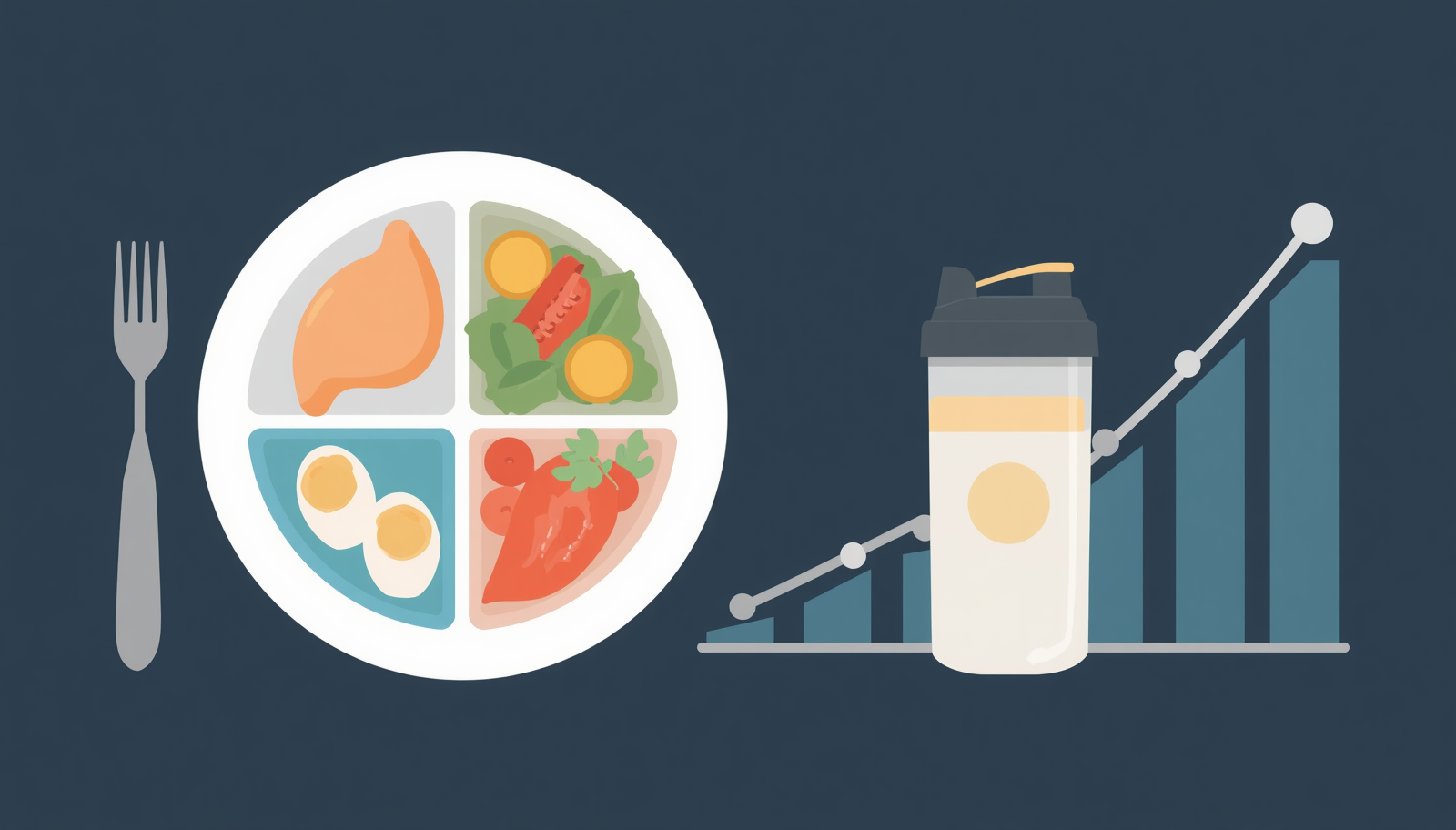
You don’t need exotic foods or expensive supplements to hit your number. These are the sources that actually show up in real training diets:
Chicken breast — roughly 30g protein per 4 oz cooked. The workhorse. Cheap, versatile, easy to meal prep in bulk. Gets boring fast but it works.
Eggs — 6g per egg, plus yolks contain nutrients most people throw away unnecessarily. A 4-egg breakfast is 24g before you add anything else.
Greek yogurt — 15–20g per cup depending on the brand. One of the few high-protein options that also works as a quick snack without cooking.
Cottage cheese — underrated. About 25g per cup, slow-digesting casein protein, and genuinely filling. Good before bed.
Canned tuna and salmon — fast, cheap, no prep required. A single can of tuna is typically 25–30g of protein. Keep a case in the pantry.
Beef (lean cuts) — 90/10 ground beef, sirloin, and flank steak run 25–30g per serving. More expensive than chicken but adds variety and comes with creatine naturally.
Protein powder — not a replacement for whole food sources, but useful as a top-up when you’re 30–40g short at the end of the day. Whey is the most researched. If you’re lactose intolerant, pea protein isolate is a solid alternative.
What About Plant-Based Protein?
It works — but you need to be more deliberate about it.
Plant proteins are often incomplete, meaning they don’t contain all nine essential amino acids in the ratios your body needs. The fix is variety: combine different plant sources throughout the day (beans and rice, for example, together provide a complete amino acid profile).
Plant-based athletes also tend to absorb slightly less protein per gram eaten compared to animal sources. The practical adjustment is to aim toward the higher end of the range — closer to 1g/lb rather than 0.7g/lb — to account for the difference.
Lentils, black beans, edamame, tofu, tempeh, and seitan are all solid plant protein sources. Protein powder (pea, soy, or rice/pea blend) becomes more important here as a practical tool.
The Simplest Way to Actually Hit Your Number
Most people fail on protein not because they don’t know the target — they fail because they don’t track it and they don’t set the meal up to succeed.
Two habits that work:
Anchor protein to every meal. Before you decide anything else about a meal, decide what the protein source is. Build everything else around it. This single shift moves most people from 80g a day to 130g without any spreadsheet required.
Use a tracking app for two weeks. Not forever — two weeks. Log everything you eat in MyFitnessPal or Cronometer and see where you actually land. Most people are shocked by how far off their estimate was. Two weeks of tracking gives you the data you need to make the right adjustments and builds the intuition to roughly track in your head afterward.
How This Changes As You Age
Past 35, the research shows something called anabolic resistance — your body becomes slightly less efficient at using protein to build muscle in response to the same stimulus. You need more protein to get the same signal.
This doesn’t mean the ceiling drops. It means the floor rises. Athletes over 35 should be targeting the upper end of the range — 0.9 to 1g per pound of bodyweight — and distributing it more evenly across meals rather than backloading it at dinner.
Sleep and recovery also become more important protein multipliers as you age. Adequate protein during a poor sleep week still won’t fully offset what inadequate sleep takes away from muscle protein synthesis.
The Bottom Line
Hit 0.7 to 1 gram of protein per pound of bodyweight every day. Anchor protein to every meal. Eat whole food sources first and use protein powder to fill gaps. Track for two weeks to see where you actually stand.
Everything else — timing, specific sources, supplements beyond whey — is secondary to hitting the daily number consistently.
Pick your bodyweight target this week. Calculate your range. Start hitting it.