The Ex-Athlete’s Guide to Staying in Shape
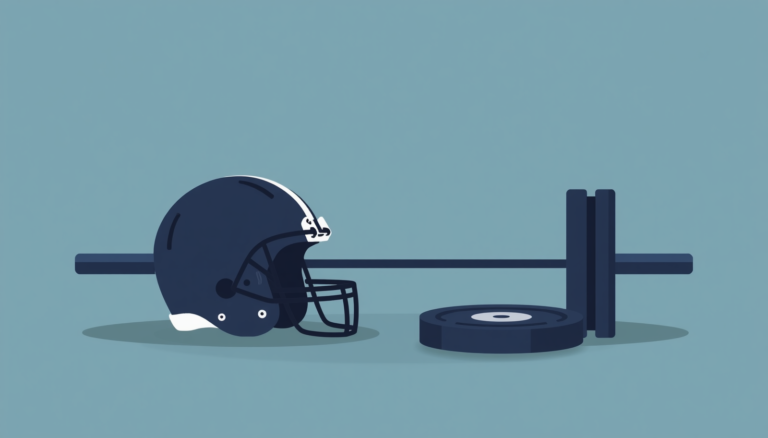
Nobody prepares you for the moment the structure disappears.
One day you have a practice schedule, a strength program, a coach, teammates who expect you to show up, and a season that gives everything a purpose. Then it ends. And suddenly you’re supposed to figure out on your own how to stay in shape — without any of the external systems that made it automatic for the last decade or more.
Most former athletes don’t go soft because they stopped caring. They go soft because they lost the infrastructure that made caring easy. This guide is about rebuilding that infrastructure for real life.
The Real Problem Isn’t Motivation
Here’s the thing most fitness content gets wrong about ex-athletes: motivation isn’t the issue.
Former athletes are among the most internally driven people on the planet. They know how to work hard. They’ve done it their whole lives. The problem isn’t that they stopped wanting to be in shape — it’s that the system that delivered results no longer exists.
In organized sports, everything is decided for you. When to train. What to do. How hard to push. Who to do it with. You just showed up and executed. That system produced results almost automatically.
Remove the system and most people default to inconsistency — not because they’re lazy, but because building and running your own training system is a completely different skill than following someone else’s.
The first step is recognizing that. The second step is building a new system that fits the life you actually have now.
Accept That the Goal Has Changed
When you were competing, training had a specific purpose: perform better on game day. Everything pointed toward that outcome — strength work, conditioning, film study, recovery. The goal was clear and the deadline was real.
Post-competition, the goal shifts. And if you don’t consciously define the new one, training loses its direction.
For most former athletes, the new goals look something like this:
- Stay strong and functional as you age
- Maintain body composition without the benefit of twice-daily practices burning calories
- Keep the athletic foundation you built so you can still move, play, and perform
- Build habits sustainable enough to last 40 more years, not just 40 more weeks
This isn’t a lesser goal. It’s a harder one — because there’s no season to train toward, no scoreboard to check, and no coach to hold you accountable. The discipline has to be entirely internal.
Most former athletes underestimate how much that shift requires. The ones who stay in the best shape long-term are the ones who define their post-competition purpose clearly and train toward it the same way they once trained toward a season opener.
The 4 Adjustments That Actually Matter
1. Trade Volume for Consistency
In your playing days, you might have trained 6 days a week with position coaches, strength coaches, and a full support staff managing your load. That volume was sustainable because it was your job.
Now it isn’t your job. And trying to replicate in-season or even off-season training volume on top of a career, a family, and actual adult responsibilities is a fast path to burning out and stopping altogether.
The adjustment: train 3–4 days a week and protect those days like appointments you can’t reschedule. Four consistent sessions a week for 5 years produces dramatically better results than 6-day programs that collapse after 6 weeks.
Think of it like dollar-cost averaging in investing — steady, consistent contributions over time beat trying to time perfect sessions. Showing up at 80% regularly beats showing up at 100% occasionally.
2. Redefine What a “Good” Workout Is
Former athletes have a distorted baseline for what counts as a real training session. If it doesn’t leave you exhausted, if it doesn’t compare to the conditioning you did in-season, it doesn’t feel legitimate.
That standard will work against you for the rest of your life if you don’t update it.
A 45-minute lifting session that hits the major movement patterns — squat, hinge, push, pull — is a genuinely excellent workout. It’s not a warmup. It’s not a consolation prize. It’s the kind of session that, done consistently over years, keeps your body performing at a level most people your age won’t come close to.
The goal isn’t to recreate the suffering of two-a-days. The goal is to stay strong, healthy, and functional for the next 40 years. Those require different sessions.
3. Build the New Structure Yourself
The structure you had in organized sports was built by coaches and institutions. Now you have to build it yourself. This is the single biggest adjustment most former athletes fail to make.
Practical structure looks like this:
Schedule the days. Pick 3 or 4 days per week and block them. Monday, Wednesday, Friday. Tuesday, Thursday, Saturday. It doesn’t matter which days — what matters is that they’re decided in advance and protected. Training on whatever days feel convenient produces inconsistent training.
Have a simple program. You don’t need a complicated periodized program with wave loading and conjugate methods. You need a basic push/pull/legs structure, or an upper/lower split, that you follow consistently. Simple programs done consistently beat sophisticated programs done sporadically. Every time.
Track your lifts. This is non-negotiable if you want to keep making progress. Write down what you lifted, how many reps, how many sets. The goal every session is to beat at least one number from the last session — more weight, more reps, or better form. Without tracking, you drift. With it, you have a scoreboard.
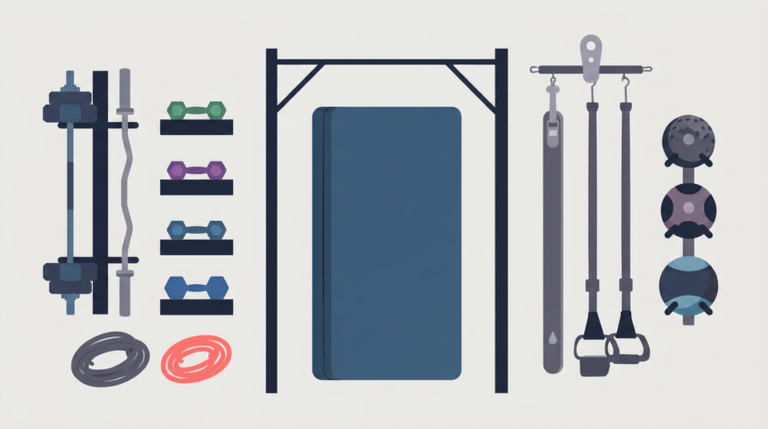
Remove friction from showing up. Home gym, gym near your office, workout clothes laid out the night before — whatever makes it easier to start. Most ex-athletes don’t quit because the workout was too hard. They quit because getting started became too much of a decision.
4. Add Conditioning That Doesn’t Feel Like Punishment
Conditioning in organized sports was brutal by design. Gassers, bear crawls, stadium stairs — built to push you past what felt possible so you could perform under pressure.
That model doesn’t serve you well as a 35-year-old with a job and bad knees.
What works instead: 2–3 sessions per week of low-to-moderate intensity cardio that you don’t dread. 30–45 minutes of whatever you’ll actually do consistently. Walking with a weighted vest. Cycling. Rowing. Golf rounds on foot. Pickup basketball once a week.
The goal of conditioning post-competition isn’t peak cardiovascular performance. It’s heart health, recovery between lifting sessions, body composition, and the kind of baseline fitness that makes everything else in life feel easier.
Find the version of cardio you’ll actually do. That’s the version that works.
The Identity Piece Nobody Talks About
This one’s harder to discuss but it matters.
For most former athletes, being an athlete was identity — not just a hobby or a phase. The sport, the team, the competition, the body it built — all of it was wrapped up in who you were. When it ends, there’s a version of yourself that goes with it.
Some people respond by clinging to the past — constantly referencing what they used to be able to do, comparing their current body to their playing weight, using former-athlete status as a substitute for current effort. That’s a dead end.
Others disconnect from it entirely — deciding that chapter is closed, that training isn’t relevant anymore, that real adults don’t prioritize the gym. That’s a different kind of dead end.
The version that actually works is carrying the athlete identity forward into a different form. You’re not a former athlete trying to recapture something. You’re a person who has always competed and always will — just against different opponents, on a different field, with different metrics.
The opponent now is time. The field is your health. The metric is how well your body functions at 45, 55, 65. That’s still competition. It still responds to the athlete’s mindset. It just requires reframing what winning looks like.
What a Realistic Week Looks Like
This isn’t a full program — it’s a framework. Adjust based on your schedule, your goals, and what you have access to.
Monday — Strength (Lower Body) Squat or trap bar deadlift, Romanian deadlift, leg press or split squat, leg curl. 45–60 minutes.
Tuesday — Active Recovery 30-minute walk, golf, light mobility work. Move without accumulating training stress.
Wednesday — Strength (Upper Body) Bench press or dumbbell press, rows, pull-ups or lat pulldown, shoulder work. 45–60 minutes.
Thursday — Conditioning 30–40 minutes of whatever cardio you’ll actually do. Bike, row, walk fast, shoot around.
Friday — Strength (Full Body or Weak Points) Deadlift variation, overhead press, unilateral work (lunges, single-arm rows), carries. 45–60 minutes.
Saturday/Sunday — Whatever you enjoy Golf, pickup game, hike, family activity. Move, but don’t count it as training.
Four sessions, four days. Manageable on top of a real life. Sustainable for years.
The Supplement Question
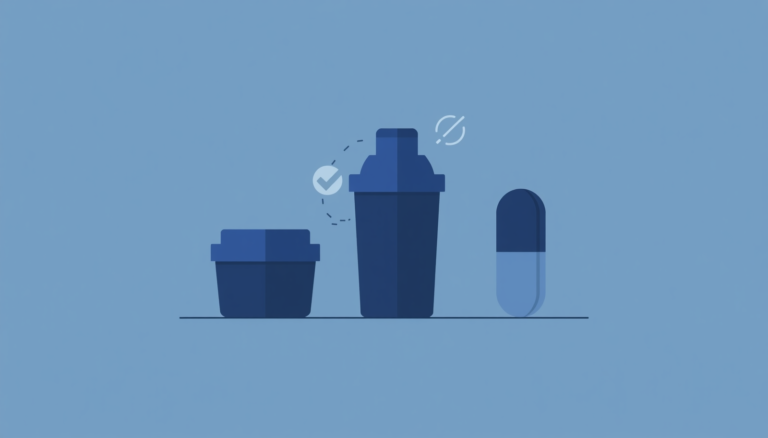
Former athletes are usually familiar with the basics — protein powder, creatine, pre-workout. Here’s the practical breakdown for someone training 3–4 days a week in their 30s:
Protein: Aim for 0.7–1 gram per pound of bodyweight daily. Food first. Protein powder fills the gap when food falls short — not a replacement for actual meals.
Creatine: The most research-backed supplement in existence for strength and muscle retention. 3–5 grams per day. No cycling needed. Take it daily. That’s it.
Pre-workout: Optional. Mostly caffeine. If you’re relying on it to get through every session, the issue is probably sleep, not stimulant deficiency.
Everything else: Generally not worth the money at this stage of training. Focus on protein, creatine, sleep, and consistency. That combination outperforms most supplement stacks.
The Bottom Line
Staying in shape as a former athlete isn’t about matching what you were. It’s about building something sustainable for who you are now — with the same competitive instinct applied to a longer game.
The structure is gone. Build a new one. The goal has changed. Define the new one. The volume has to drop. Replace it with consistency.
The athletes who look and feel the best in their 40s and 50s aren’t the ones who trained the hardest in their 20s. They’re the ones who never fully stopped — who adapted, adjusted, and kept showing up when the scoreboard disappeared.
You already know how to compete. The only question is whether you’re willing to compete at this version of the game.
Your next move: Pick your 3 training days for next week right now — not when it feels convenient, right now — and put them in your calendar. That’s the whole system to start. Everything else builds from there.
Sources & Data
- Physical activity guidelines for adults: U.S. Department of Health and Human Services — Physical Activity Guidelines for Americans
- Creatine supplementation research: International Society of Sports Nutrition — Creatine Position Stand
- Protein intake recommendations for active adults: American College of Sports Medicine — Nutrition and Athletic Performance
- Strength training and aging: National Strength and Conditioning Association
- Exercise adherence and habit formation research: Journal of Behavioral Medicine
Disclaimer: The information on this site is for educational and informational purposes only and does not constitute medical or fitness advice. Always consult a qualified professional before beginning any new training program.