Best Home Gym Equipment Ranked by Value — Amazon Picks
Not all home gym equipment earns its place. Some of it collects dust inside a week. Some of it gets used every single day for years. After two decades of lifting and building out my own setup piece by piece, I know which is which.
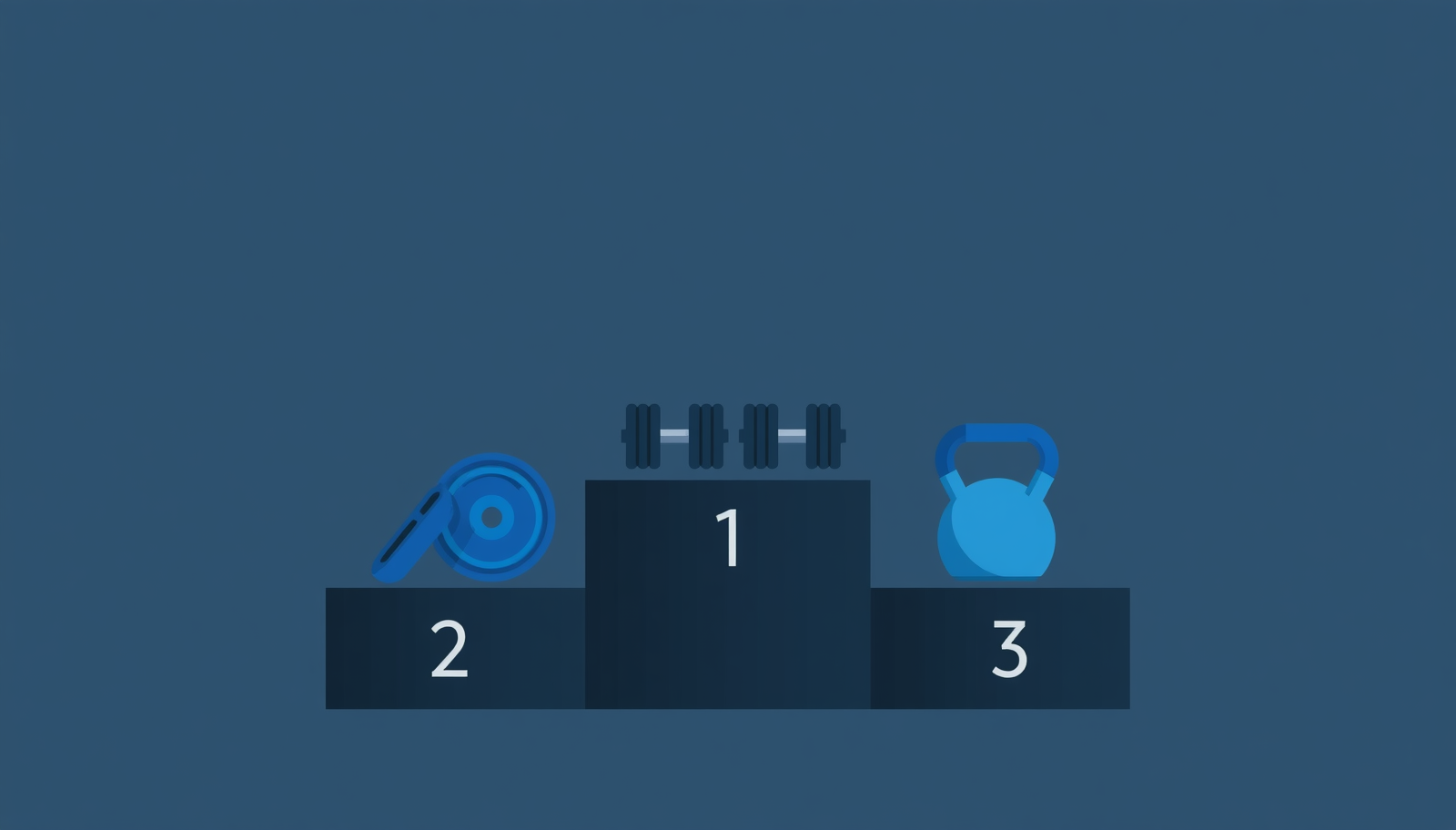
This list isn’t about the flashiest gear or the most expensive setup. It’s about value — what gives you the most training return per dollar spent. I’ve ranked everything from highest to lowest based on one question: if I could only keep one piece, would I keep this?
(Note: No affiliate links are active yet on this site. When they are, I’ll link directly to recommended products on Amazon. In the meantime, all product names mentioned can be found easily with a quick search.)
How I Ranked These
Value = utility ÷ cost. Something that costs $50 and gets used 4 times a week beats something that costs $500 and gets used once. I also weighted durability — cheap equipment that breaks in 6 months isn’t a deal, it’s a trap.
I didn’t include everything. I left out anything with a high “sounds cool, rarely used” ratio — cable machines, ab rollers, battle ropes. The list below is what serious lifters actually use.
Tier 1: Non-Negotiable — Buy These First
Adjustable Dumbbells (Bowflex SelectTech 552 or PowerBlock)
Value ranking: 10/10
If I could only keep one piece of equipment, it would be adjustable dumbbells. They replace 15 pairs of fixed dumbbells, take up the space of a carry-on bag, and cover about 80% of the exercises most people actually do — rows, curls, presses, laterals, lunges, Romanian deadlifts.
The Bowflex SelectTech 552s go from 5 to 52.5 lbs per dumbbell and adjust in 2.5-lb increments up to 25 lbs. The PowerBlocks are bulkier but more durable and expandable to 90 lbs with an add-on kit. Either one pays for itself in the first year if you’re training consistently.
Cost: $300–$450 per pair | Durability: 10+ years with basic care
Pull-Up Bar (Wall-Mounted or Doorframe)
Value ranking: 9/10
Pull-ups are the most underrated upper-body exercise most people skip because they’re hard. That’s exactly why you should own a bar and do them.
A doorframe pull-up bar runs $20–$40 and works. A wall-mounted bar is more stable and handles heavier loads — worth it if you’re over 200 lbs or plan to add weight. It also doubles as a hanging point for resistance bands and TRX straps.
One caveat: check your doorframe before buying a hanging style. If you have cheap hollow-core doors or non-standard frames, go wall-mounted.
Cost: $20–$80 | Durability: Years
Resistance Bands (Loop and Long-Style)
Value ranking: 9/10
Resistance bands are the most versatile piece of equipment per dollar in existence. You can warm up with them, add resistance to bodyweight movements, assist pull-ups, use them for mobility work, and light rows when you don’t want to load a barbell.
Get both styles: a set of loop bands (flat mini-bands for glute work and warm-ups) and a set of long resistance bands in multiple resistance levels for assisted pull-ups and standing exercises. A complete set of both will run you $30–$60.
Cost: $30–$60 | Durability: 2–5 years depending on use
Adjustable Bench (REP Fitness AB-3000 or Similar)
Value ranking: 9/10
A flat bench is useful. An adjustable bench is essential. The ability to press at multiple angles — flat, incline, decline — unlocks the full chest and shoulder training spectrum. It also turns a pair of adjustable dumbbells into a nearly complete upper body gym.
Don’t buy the $80 bench at Walmart. The pad compresses, the legs wobble, and you’ll replace it in a year. The REP Fitness AB-3000 runs around $200 and will last indefinitely. This is one place where spending more upfront saves money long-term.
Cost: $180–$250 | Durability: Indefinite if you buy quality
Tier 2: High Value — Add These Once Tier 1 Is Set
Barbell + Weight Plates (or a Trap Bar)
Value ranking: 8/10
If you’re serious about building strength, you eventually need a barbell. Nothing replicates a barbell deadlift, squat, or bench press for raw strength development. The question is whether your space and budget support it.
A basic 45-lb Olympic barbell runs $100–$150 from Titan Fitness or Rogue’s entry-level options. Plates are the bigger variable — expect to spend $1–$2 per pound for new iron plates, more for bumper plates. A starter set (barbell + enough plates to lift seriously) runs $300–$600.
The alternative worth considering: a trap bar. It’s easier to learn than a straight bar, safer on your lower back for high-rep deadlifts, and more versatile than most people realize. If you’re not planning to compete in powerlifting, a trap bar might actually be the smarter buy.
Cost: $300–$600 (barbell + plates) | $150–$250 (trap bar alone) | Durability: Indefinite
Squat Stand or Power Rack
Value ranking: 8/10
If you own a barbell, you need somewhere safe to rack it for squats and bench press. A squat stand is the minimalist option — two uprights, hooks, no spotter arms. A power rack adds safety pins so you can train heavy without a spotter.
For a home gym, a squat stand is usually sufficient unless you’re regularly squatting near your max. Titan Fitness makes solid entry-level options in the $200–$400 range. A full power rack runs $500+, but the safety factor is worth it if your strength is at a point where missing a rep is a real concern.
Cost: $200–$400 (squat stand) | $500+ (power rack) | Durability: Indefinite
Kettlebell (Single, 35–53 lbs)
Value ranking: 7/10
Kettlebells are efficient. Swings, goblet squats, Turkish get-ups, farmers carries — all hit major muscle groups in a way that crosses over directly into athletic movement patterns. They also double as a conditioning tool.
You don’t need a full set. Buy one kettlebell at a weight that challenges you for swings (most men land in the 35–53 lb range) and learn to use it well before buying another. Cast iron kettlebells are the standard — expect to pay $1–$2 per pound for a quality piece.
Cost: $35–$106 depending on weight | Durability: Indefinite
Gymnastics Rings
Value ranking: 7/10
Rings are cheap and brutally effective. Ring rows, ring push-ups, ring dips, and eventually muscle-ups if you put in the work — all from a $30 set that hangs from your pull-up bar or any overhead anchor point.
They’re also humbling in the best way. You think you’re strong until you try a ring push-up and realize how much core and shoulder stability you’ve been skipping. If you’ve plateaued on bodyweight work, rings are the next step.
Cost: $25–$40 | Durability: Years
Tier 3: Nice to Have — Add When Budget Allows
Plyo Box (or DIY Option)
Value ranking: 6/10
Box jumps, step-ups, Bulgarian split squats, seated box jumps for power development — a plyo box earns its spot once you have the basics covered. A foam soft-sided box is safer for jumping (you’ll skin your shin on a wooden one eventually). A wooden box is cheaper to build yourself if you’re handy.
Cost: $80–$150 (foam) | $30–$50 in materials (DIY wood) | Durability: High
Dip Bars (Freestanding)
Value ranking: 6/10
Dips are one of the best pressing exercises you can do. Freestanding dip bars let you do them without a power rack, and they’re more stable than door-mounted options. They’re also useful for leg raises and tricep work.
If you already have a power rack, you don’t need them — most racks have dip attachments. If you don’t have a rack, standalone dip bars are a solid $50–$80 investment.
Cost: $50–$80 | Durability: Years
Weight Belt
Value ranking: 6/10
Not for protecting your back — that’s a myth. A weight belt is for adding external load to pull-ups, dips, and ring work once bodyweight isn’t enough. If you’re doing more than 12 clean pull-ups per set, you need a belt and a plate.
A simple dipping belt with a chain runs $25–$40. A leather lifting belt for squats and deadlifts costs more ($60–$150) and is only necessary once you’re lifting heavy enough that intra-abdominal pressure becomes a training variable worth managing.
Cost: $25–$40 (dipping belt) | $60–$150 (lifting belt) | Durability: Indefinite
What I’d Skip
Smith machines — expensive, takes up enormous space, and trains a movement pattern that doesn’t transfer to real athletic strength.
Ab wheels — not bad, but redundant once you’re doing heavy compound lifts that require real core stability.
Multi-station cable machines — great if you have $2,000 and 400 square feet. Most people don’t, and the adjustable dumbbells cover the same exercises.
Foam rollers and massage guns — low training value, high “feels productive” energy. Buy this last if ever.
The Build Order If You’re Starting From Zero
Here’s how to sequence your purchases if you’re building from scratch:
- Resistance bands + pull-up bar (~$60–$80) — train immediately, covers pull work and mobility
- Adjustable dumbbells (~$300–$400) — unlocks 80% of your programming
- Adjustable bench (~$200) — completes upper body training
- Barbell + plates or trap bar (~$300–$600) — when you’re ready to go heavier
- Squat stand or power rack (~$200–$400) — when you need to rack the bar
- Everything else — add based on where your training has gaps
If your budget is limited, the home gym setup article I wrote has you covered under $500.
Final Thought
The best home gym is the one you actually use. A $3,000 setup that collects guilt is worse than a $300 setup that gets hit 4 days a week. Start with the basics, train consistently, and add equipment as your programming demands it — not before.
That’s how you build a gym worth using.
Sources & Data
- Equipment pricing based on current Amazon and manufacturer listings (Bowflex, PowerBlock, REP Fitness, Titan Fitness, Rogue). Prices fluctuate — verify before purchasing.