Creatine, Protein, Pre-Workout — What Actually Works
The supplement industry is a $50 billion business built largely on marketing. Walk into any GNC or scroll through any fitness account and you’ll find hundreds of products promising faster gains, better pumps, more energy, and faster recovery — most of them backed by selective science, aggressive branding, and very little honest information.
Here’s the honest version.
Three supplements have enough legitimate research behind them to be worth your money: creatine, protein, and caffeine. Everything else is either understudied, overhyped, or a repackaged version of one of those three. This article breaks down what each one does, what the data actually shows, how to take them, and what to skip.
Twenty years in the weight room taught me that most supplement decisions are driven by marketing, not results. This is the information I wish I’d had at 22.
Creatine — The One Supplement With No Legitimate Debate
If you only take one supplement, make it creatine. It’s the most researched performance supplement in existence, the evidence for it is overwhelming, and it costs almost nothing.
Here’s what creatine actually does: your muscles use a compound called ATP for short, explosive efforts — a heavy squat, a sprint, a vertical jump. ATP depletes quickly. Creatine helps your muscles regenerate ATP faster, which means you can do more work at high intensity before fatigue sets in. More work over time equals more strength and more muscle.
The research is unambiguous. Hundreds of studies across decades show that creatine supplementation increases strength, power output, and lean mass in people who resistance train. It’s not subtle — the effect size is meaningful and replicates consistently across different populations, training backgrounds, and age groups.
What the data shows:
- Average strength increase of 5–15% in compound lifts over 4–12 weeks compared to placebo
- Average lean mass gain of 1–2 kg more than training alone over the same period
- Benefits documented in athletes, recreational lifters, and older adults (40+)
How to take it:
- 3–5 grams per day of creatine monohydrate. That’s it.
- No loading phase required — the old protocol of taking 20 grams a day for a week works faster but produces the same long-term result. Just take 5 grams daily and give it 3–4 weeks.
- Take it whenever is convenient — timing doesn’t matter meaningfully. With your post-workout shake, with breakfast, before bed — pick a consistent time and stick with it.
- Buy creatine monohydrate. Not creatine HCl, not buffered creatine, not any branded proprietary form. Monohydrate is the version with all the research behind it, and it’s the cheapest. Ignore the marketing on everything else.
What about the bloating concern? Some people experience mild water retention in the first week or two as creatine pulls water into muscle cells. This is the mechanism — it’s not harmful and it typically subsides. If you’re highly sensitive to it, try 3 grams daily instead of 5.
Cost: A 500-gram tub of unflavored creatine monohydrate from a reputable brand runs $20–$30 and lasts 3–4 months. It’s one of the cheapest supplements per serving you’ll find.
Protein — Food First, Supplement Second
Protein isn’t really a supplement in the traditional sense — it’s a macronutrient your body needs regardless of whether you lift weights. What protein powder does is make it easier and cheaper to hit your daily protein target when whole food sources aren’t practical.
The target: 0.7–1.0 grams of protein per pound of bodyweight per day for someone who resistance trains. A 185-pound person needs roughly 130–185 grams of protein daily. That’s the range where research shows meaningful muscle protein synthesis — the process your body uses to build and repair muscle tissue after training.
Most people who train aren’t hitting this number consistently. Not because they’re not trying, but because hitting 160 grams of protein through whole foods alone requires deliberate planning at every meal. Chicken breast, eggs, Greek yogurt, cottage cheese, beef — these are the foundation. Protein powder fills the gap.
What type of protein powder to buy:
Whey protein is the standard for good reason. It’s a complete protein — containing all essential amino acids — with a high leucine content that drives muscle protein synthesis. It digests quickly, which makes it useful post-workout when your muscles are primed to use it.
- Whey concentrate: Less processed, slightly more fat and carbs, cheaper. Fine for most people.
- Whey isolate: More processed, higher protein percentage per scoop, lower lactose. Better if you’re lactose sensitive or watching calories tightly.
- Casein: Digests slowly — useful before bed if you want a sustained protein release overnight. Not necessary, but not useless.
- Plant-based (pea + rice blend): A complete amino acid profile when combined. Slightly lower leucine than whey but a meaningful difference only at very high training volumes. Solid option if you avoid dairy.
What to look for on the label: 20–30 grams of protein per serving, minimal added sugars, and a short ingredient list. Avoid anything with a “proprietary blend” that hides individual ingredient amounts — that’s usually a sign the doses are too low to matter.
How much do you actually need from powder? Most people need 1–2 scoops per day to bridge the gap between what they eat and their daily target. More than that and you’d be better off eating more whole food protein instead.
Cost: A quality whey protein (Optimum Nutrition Gold Standard, MyProtein Impact Whey, Transparent Labs) runs $40–$60 for a 5-pound tub — roughly 70 servings. About $0.60–$0.85 per serving.
Pre-Workout — Mostly Caffeine, Sold Expensively
Let’s cut through the noise on pre-workout: the active ingredient doing the work in almost every pre-workout formula is caffeine. Everything else — the beta-alanine, the citrulline, the pump-matrix blends — is either understudied, dosed too low to matter, or produces effects too marginal to justify the price.
Caffeine works. It’s one of the most studied ergogenic aids in sports science. It reduces perceived exertion, increases alertness, improves muscular endurance, and produces measurable performance benefits in both strength and cardio training. The effective dose is 3–6 mg per kilogram of bodyweight — for a 185-pound (84 kg) person, that’s roughly 250–500 mg.
Most pre-workouts contain 150–300 mg of caffeine per serving, which puts them in the effective range. You’re paying $40–$60 for a tub of mostly caffeine, some B vitamins, and a handful of ingredients with varying levels of research support.
The honest alternatives:
- Black coffee: 80–100 mg of caffeine per cup. Two strong cups 30–45 minutes pre-workout = 160–200 mg. Free if you already buy coffee. This is what most serious lifters I know actually use.
- Caffeine tablets: Pure caffeine, 200 mg per tablet, available on Amazon for $10 for 100 tablets. If you want the exact same active ingredient without the flavoring, coloring, and marketing, this is it.
What about beta-alanine and citrulline?
Beta-alanine has some research support for endurance performance — it buffers lactic acid buildup and can delay fatigue in efforts lasting 1–4 minutes. The tingling sensation (paresthesia) some people get is harmless. The effective dose is 3.2–6.4 grams daily, taken consistently — not just pre-workout. Most pre-workouts underdose it.
Citrulline malate has decent research for muscular endurance and blood flow at doses of 6–8 grams. Again, most pre-workouts underdose it. If you want the actual benefit, buy it separately.
The bottom line on pre-workout: If caffeine helps you train harder, use caffeine. Whether you get it from a pre-workout tub, coffee, or a $10 bottle of tablets is a personal preference and budget decision. The rest of the formula is mostly noise.
What to skip entirely: Testosterone boosters, fat burners, BCAAs (redundant if your protein intake is adequate), and anything marketed with before-and-after photos from sponsored athletes. The FTC has settled multiple cases against supplement companies for exactly these marketing practices.
The Supplement Priority Order
If you’re starting from scratch, here’s the order:
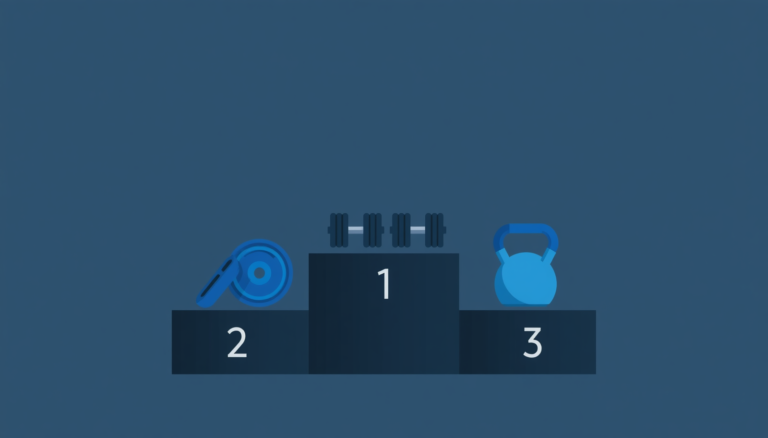
- Creatine monohydrate — 5g daily. Start here. Unambiguous evidence, low cost, no meaningful downsides for healthy adults.
- Protein powder — as needed to hit your daily target. Food first. Powder fills the gap.
- Caffeine — if you want a pre-workout effect. Coffee works. Caffeine tablets work. A pre-workout formula works if you don’t mind paying more for the packaging.
Everything else — adaptogens, nootropics, recovery blends, hormone optimizers — can wait until you’ve been consistent on the basics for at least a year. Most of it can wait indefinitely.
The Thing Supplements Can’t Fix
Supplements are a multiplier on an existing training foundation. Creatine makes a good training program better. It doesn’t make a bad one work.
If your program doesn’t have progressive overload built in — if you’re doing the same weight and reps every week — no supplement stack is going to move the needle. If you’re not sleeping 7–8 hours, not eating enough calories, and not recovering between sessions, creatine and protein are rearranging deck chairs.
Get the foundation right first. If you’re not sure what that looks like, the progressive overload article on this site is the place to start. And if your training age is 30+ and you’re managing recovery differently than you did at 22, the lifting after 30 article covers what actually changes and what to do about it.
Supplements are the last 5–10% of the equation. Train consistently, eat enough protein from whole foods, sleep well, and then add creatine. In that order.