How to Invest Your First NIL Check — Step by Step
You worked for it. You built a brand, signed a deal, and now there’s actual money in your account with your name on it. That’s real — don’t take it for granted.
Most college athletes have no idea what to do next. They spend it, they sit on it, or they hand it off to someone else to figure out. None of those are the right answer.
Here’s what to actually do with your first NIL check — in order, with real numbers.
Step 1: Set Aside Taxes Before You Touch Anything Else
This is the most important step. Skip it and you’ll regret it at tax time.
NIL income is self-employment income. That means nobody withholds taxes for you. No employer. No school. Nobody. You get the full check — and the IRS expects you to send them their cut.
As a general rule, set aside 25–30% of every NIL check immediately. Put it in a separate savings account you don’t touch. If your NIL deal paid you $2,000, that’s $500–$600 that isn’t yours to spend.
If you’re earning more than $1,000 in NIL income per year, you’ll likely need to make quarterly estimated tax payments. The IRS doesn’t wait until April — they expect payments in April, June, September, and January. Missing those deadlines means penalties on top of what you already owe.
Talk to a CPA if you’re unsure of your exact situation. The cost of one tax consultation is almost always less than the penalty for getting it wrong.
Step 2: Build a $1,000 Cash Cushion First
Before you invest anything, you need a floor.
A cash cushion — or starter emergency fund — is $500 to $1,000 sitting in a high-yield savings account that you only touch if something goes wrong. Car breaks down. Unexpected expense. Life happens.
The reason you do this first is simple: if you invest everything and then need cash, you’ll sell investments at the wrong time. You’ll lock in losses and pay taxes on the gains. The cushion prevents that.
A high-yield savings account (HYSA) is the right place for this money. You can open one online in about 10 minutes. Look for accounts paying 4–5% APY. Marcus by Goldman Sachs, Ally, and SoFi all offer competitive rates. Your campus bank probably doesn’t.
Once you’ve got $1,000 set aside and taxes covered, you’re ready to invest the rest.
Step 3: Open a Roth IRA If You Don’t Have One
If you’re earning NIL income, you’re eligible to contribute to a Roth IRA. This is one of the best financial moves a young person with earned income can make — and most college athletes don’t know it’s an option.
Here’s what makes a Roth IRA powerful: you contribute money you’ve already paid taxes on, and it grows completely tax-free. You don’t pay taxes when you take it out in retirement. That’s a massive deal when you’re 20 years old and have 40+ years of compounding ahead of you.
The 2026 contribution limit is $7,500. You can contribute up to the amount you earned in NIL income, whichever is lower. So if you made $3,000 in NIL deals, you can put up to $3,000 into a Roth IRA this year.
Open one at Fidelity, Vanguard, or Schwab. They’re all free to open, have no account minimums, and take about 15 minutes to set up.
Step 4: Invest It Simply — Don’t Overthink It
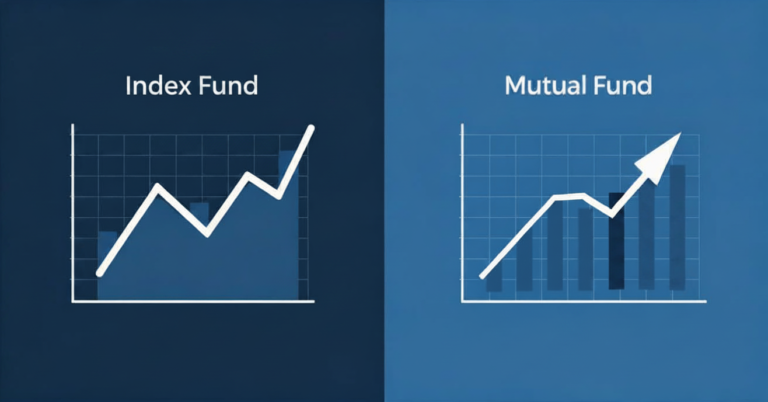
Once your Roth IRA is open, here’s what to buy: a total market index fund or an S&P 500 index fund. That’s it.
Two options worth knowing:
- FSKAX (Fidelity Total Market Index Fund) — 0.015% expense ratio, zero minimum investment
- VTSAX (Vanguard Total Stock Market Index Fund) — 0.03% expense ratio, $3,000 minimum
If you don’t meet the Vanguard minimum, start with FSKAX or buy the ETF version of any total market fund (VTI, for example, trades like a stock with no minimum).
You’re not picking individual stocks. You’re not buying crypto. You’re buying a tiny slice of thousands of companies at once. It’s boring. It works.
The average annual return of the S&P 500, adjusted for inflation, is around 7% per year over the long run. $5,000 invested at 20 becomes roughly $75,000 by the time you’re 60 — without adding another dollar.
Step 5: Automate It So You Don’t Have to Think About It
Here’s the trap most people fall into: they invest their first check and then stop. Life gets busy. The next check comes in and it disappears into a weekend or a new phone or whatever.
Set up automatic contributions. Most brokerages let you schedule recurring transfers — $50 a week, $200 a month, whatever fits your situation. Every time money hits your account, a portion goes into your Roth IRA automatically.
Think of it like a training schedule. You don’t decide whether to show up every day — you just show up. Automating your investments removes the decision and removes the temptation.
What If Your NIL Check Was Small?
If your first NIL check was $500 or less, the order is still the same — you just scale it down.
Set aside taxes. Keep a small cash cushion. Open the Roth IRA anyway and put whatever’s left inside it. Even $200 in a Roth IRA at 20 years old is worth having.
The habit matters more than the amount. Athletes who build the discipline of investing every check — no matter the size — end up in a completely different place at 30 than the ones who waited until the money felt “big enough.”
The Bottom Line
Your first NIL check is an opportunity most people your age don’t have. Don’t blow it by ignoring taxes. Don’t let it sit in a checking account doing nothing. And don’t overcomplicate the investing piece.
Set aside taxes. Build a $1,000 cushion. Open a Roth IRA. Buy an index fund. Automate it.
That’s the whole playbook. Start there.
This article is for informational purposes only and does not constitute personalized financial, tax, or legal advice. Consult a qualified professional for guidance specific to your situation.
Sources & Data
- IRS.gov — Self-employment tax and quarterly estimated payment schedule
- IRS.gov — Roth IRA contribution limits and eligibility rules (2026)
- Fidelity.com — FSKAX fund details and expense ratio
- Vanguard.com — VTSAX fund details and expense ratio
- NerdWallet — Long-run S&P 500 average annual return (inflation-adjusted, ~7%)